For a long time, office design followed a simple idea: desks, meeting rooms, a pantry, done. It worked because work itself was predictable. Fixed hours. Fixed roles. Fixed expectations. That model doesn’t hold anymore, especially with Gen Z entering the workforce.
Companies aren’t redesigning offices to look cool or Instagram-ready. They’re doing it because the old layouts quietly stopped working.
Gen Z Doesn’t Separate “Work” From “Experience”
This generation grew up switching between screens, spaces, and modes of attention. They don’t expect work to feel like college. But they also don’t expect it to feel rigid.
Traditional offices assume:
- You sit in one place
- You work the same way all day
- Collaboration happens in scheduled meetings
Gen Z works differently. They move between focus and collaboration more often. Some tasks need silence. Others need a quick discussion. Offices designed around only one mode create friction fast. Redesigning the office is less about aesthetics and more about reducing that friction.
Flexibility Is No Longer a Perk
Earlier, flexibility meant remote work policies or relaxed timings. For Gen Z, flexibility also means physical space.
They notice things like:
- Where informal conversations happen
- Whether there’s space to work alone without booking a room
- How easy it is to switch between teamwork and solo work
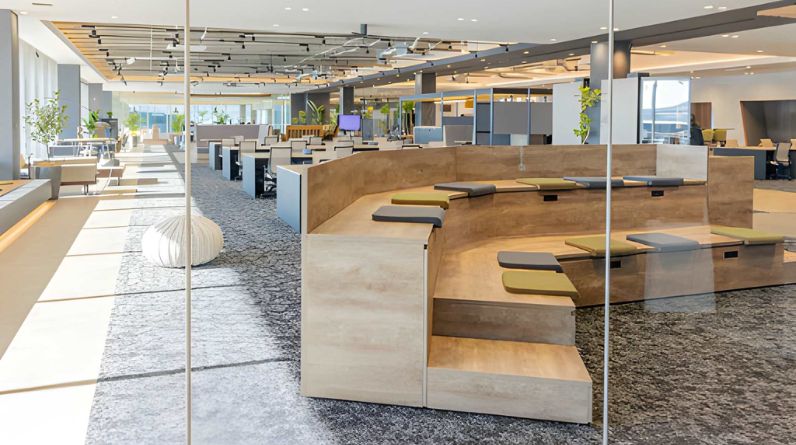
Open offices tried to solve collaboration. They didn’t solve the focus. Now companies are correcting that mistake. Zones matter again. Quiet corners. Small meeting pods. Shared tables. None of this is new. But it’s being used more intentionally now.
Offices Are Becoming Learning Spaces
Gen Z joins organisations expecting growth, not just employment. That expectation shows up in how they use office space. Training rooms that double as collaboration spaces. Areas where senior team members naturally spend time, not hide behind cabins. Visual access to how teams actually work.
These design choices send subtle signals:
- Learning is ongoing
- Access is open
- Asking questions is normal
Companies that ignore this often struggle with early attrition. Not because the work is bad, but because the environment feels closed.
Location Still Matters, Just Differently
There’s a quiet shift happening away from only Tier 1 business districts. Not because cities like Bengaluru or Mumbai are losing relevance, but because workforces are spreading out. In cities like Kochi and Ahmedabad, companies are rethinking what an office needs to offer.
When teams evaluate Office Space in Kochi, the conversation often centres on balance. Commute times are shorter. The pace is steadier. That allows offices to focus more on usability than density.
Similarly, Office Space in Ahmedabad is attracting teams that want scale without constant operational stress. Offices here are being designed for long-term teams, not rapid churn. For Gen Z employees who value stability and lifestyle alongside ambition, these locations make sense.
The Role of Community Inside the Office
Gen Z doesn’t respond well to forced culture. But they do respond to environments that make connection easy.
This is why companies are redesigning:
- Larger pantries into social spaces
- Reception areas into informal meeting zones
- Dead corridors into usable breakout spaces
The idea isn’t to make people “bond.” It’s to remove barriers to interaction.
When space supports casual conversation, collaboration becomes natural. When it doesn’t, even the best culture decks fall flat.
Hybrid Work Changed Expectations Permanently
After experiencing remote and hybrid work, Gen Z compares offices to home setups. That comparison isn’t about comfort alone. It’s about control.
Offices now need to justify the commute.
This is where redesign becomes critical. If the office doesn’t offer:
- Better collaboration than home
- Better infrastructure than home
- Better energy than home
People disengage. Not loudly. Gradually.
Redesigned offices focus on what homes can’t provide easily: team energy, shared context, faster problem-solving.
Design Is Now a Retention Tool
Earlier, office design was a facilities decision. Today, it’s tied to retention and hiring.
Gen Z notices:
- How crowded spaces feel
- Whether leadership is visible
- If the office supports different working styles
These things influence whether someone stays beyond the first year. In delivery-heavy teams, especially in growing cities, thoughtful office design reduces burnout without expensive interventions.
What This Means for Companies
Redesigning offices for Gen Z isn’t about trends. It’s about alignment. The companies getting this right aren’t copying global designs. They’re observing how their teams work and adjusting space accordingly.
Whether it’s a central hub or emerging locations offering Office Space in Kochi or Office Space in Ahmedabad, the principle stays the same:
design for people first, not policies.
Final Thought
Gen Z isn’t asking for special treatment. They’re responding to environments that respect how work has changed. Offices that adapt will stay relevant. Those who don’t won’t fail overnight. They’ll just feel empty faster than expected.