Asthma in children is more than just occasional breathing difficulty. It is a condition that affects daily life, sleep, physical activity, and emotional well-being. Childhood asthma can impact normal growth, sleep quality, and lung function if not managed properly. Parents often feel helpless when they see their child struggle with wheezing, coughing, or breathlessness. Many families therefore explore Asthma Homeopathy Treatment as a primary care, as well as a supportive option to treat asthma by addressing the root cause rather than offering short-term symptom suppression.
There is enough evidence supporting the effectiveness of the unique approach of homeopathy in treating asthma.Homeopathy does not use a one-size-fits-all approach to treat asthmatic kids. Instead, it looks at how asthma shows up in a particular kid, what triggers the allergic response, and how the child reacts physically and emotionally. This individualised methodology of selecting remedies for holistic homeopathy treatment is what attracts parents for their kids’ treatment from respiratory conditions, like asthma.
Common Asthma Types
Asthma can present in different forms, especially in children. Understanding the specific type can help the doctor and the parents recognise triggers, manage symptoms and asthma attacks, and support respiratory function more effectively. However, both diagnosis and treatment must be done by a qualified professional.
Chronic asthma
This form involves long-term airway sensitivity with recurring asthma attacks and reduced lung function over time. Children may experience flare-ups repeatedly over months or years without proper management.
Allergic asthma
As the name suggests, allergic asthma is caused by triggers such as allergens such as dust, pollen, pet dander, mold, or hay fever. Symptoms often worsen after allergic reactions and may be linked with allergic rhinitis or nasal congestion.
Exercise-induced asthma
One reason why asthma patients are recommended only light exercises is that strenuous or aggressive workouts can lead to exhaustion and also induce asthmatic attacks in the patients. This type of asthma is called exercise-induced asthma. Breathing difficulty appears during or after physical activity. Common triggers behind this type include cold air, physical exertion, and reduced respiratory function.
Seasonal asthma
Symptoms worsen during specific seasons due to pollution, weather changes, or increased allergens, often leading to asthmatic attacks in sensitive asthma patients.
Understanding Childhood Asthma in Simple Terms
Asthma is classified as a chronic respiratory condition. In this condition, the airways become sensitive and inflamed. When exposed to triggers, the airways constrict, that is, narrow, and also produce excess mucus. This gives a lesser area for the air to come in and therefore reduces lung function. This, in turn, makes breathing difficult.
In children, asthma symptoms can appear suddenly and may worsen faster than expected.
Most common symptoms of childhood asthma include a wheezing sound from the chest, tightness in the chest, nasal congestion, a wet and frequent cough, and shortness of breath. In many cases, the child may experience aggravated symptoms, especially at night or early morning. On the other hand, many struggle with the symptoms during physical activity or weather changes.
Since children may not always describe discomfort clearly, parents often notice restlessness, fatigue, or avoidance of play – the common indicators of breathing difficulty and potentially, asthma.
Early diagnosis and proper treatment are critical for healing the child and preventing recurrent asthma attacks.
How Does Asthma Affect Kids Differently
Asthma behaves differently in children compared to adults. A child’s airways are naturally smaller, which means even mild swelling can affect lung function significantly. Their immune systems are also still developing, making them more sensitive to allergic reactions and infections like chronic bronchitis.
Children may struggle to identify early warning signs. Instead of saying they feel breathless, they may become irritable or unusually quiet. Asthma can interfere with school attendance, physical activity, and confidence.
Repeated asthma attacks may impact respiratory function and lung development if not managed properly, highlighting the need for individualised care.
Beyond Conventional Symptom Control – Why Parents Choose Homeopathic Treatment
Conventional methods of asthma management in kids often use bronchodilator inhalers – preparations used to expand the airways to facilitate obstruction-free breathing for quick relief. Often it is combined with oral medications to relieve the child from asthmatic attacks and symptoms. Though effective, patients are often interested in finding a more reliable and long-lasting solution. This is where homeopathy shines, offering long-term relief, reduced recurrence, and improved physical recovery.
Even though conventional systems are more focused on offering immediate relief and rarely a long-term solution, conventional medications are still essential. Nothing beats them when it comes to quickly managing the attacks. Therefore, a combined approach is often recommended, even by the most capable and experienced homeopathic experts.
Homeopathy aims to strengthen the body’s response, improve lung function, reduce asthma attacks, and provide long-term relief by addressing the root cause of respiratory conditions.
Homeopathy as a Holistic System for Asthma Management
Homeopathy is based on patient individualisation and careful homeopathic prescribing for the best remedy selection.Treatment is not decided by diagnosis alone but by how asthma affects the child physically and emotionally. Respiratory conditions, emotional sensitivity, and environmental exposure are evaluated together.
A homeopathic doctor may explore factors such as:
- Sensitivity to weather or allergens
- Sleep patterns and breathing difficulties
- Emotional stress and allergic response
- Family history of allergic asthma or chronic bronchitis
Based on this, suitable homeopathic remedies and homeopathic medicines are selected to support balance without suppressing symptoms.
Common Homeopathic Remedies for Asthma Treatment in Kids
Homeopathic remedies are selected based on the child’s symptom pattern, triggers, and sensitivity.
These homeopathic medicines are prescribed after professional evaluation and careful homeopathic prescribing.
- Arsenicum Album – Used when asthma attacks worsen at night with anxiety
- Ipecacuanha – Helpful in persistent wet cough with breathing difficulty
- Natrum Sulphuricum – Used when symptoms worsen in damp conditions
- Antimonium Tartaricum – Often prescribed in asthma accompanied by chest congestion and mucus rattling
- Pulsatilla – Indicated in changeable symptoms and mild allergic asthma
Disclaimer: These homeopathic remedies are for educational purposes only. Always consult a qualified homeopathic doctor before giving your child any homeopathic medicine. Avoid self-medication at all costs.
How Doctors Approach Asthma Homeopathy Treatment For a Child Patient
A classical homeopathic doctor begins with detailed case-taking. The consultation explores physical symptoms, emotional patterns, respiratory conditions, and developmental history.
Parents are asked about:
- Frequency and severity of asthma attacks
- Triggers like dust, exercise, or infections
- Appetite, sleep, and nasal congestion
- Emotional behaviour during asthmatic attacks
Based on this, a personalized plan using homeopathic treatment is created. Regular follow-ups ensure safety and significant improvement over time.
The Role of Individualised Medicines in Children
In homeopathy, two asthma patients rarely receive the same medicine. Treatment depends on symptom expression, severity, such as moderate asthma, and sensitivity levels.
Medicines are chosen to improve lung function and respiratory function gradually. Dosage is carefully adjusted, and follow-ups help monitor progress.
This individualized treatment approach helps reduce asthma attacks, prevent other respiratory conditions, and build long-term respiratory stability.
Supporting Lifestyle and Environmental Factors
Medicines alone are not the only focus. Supportive care may include:
- Improving ventilation and reducing allergens
- Managing allergic reactions and nasal congestion
- Encouraging breathing exercises for better lung function
- Maintaining calm routines to reduce stress
Breathing exercises support respiratory function and complement homeopathic treatment effectively.
Safety, Monitoring, and Long-Term Outlook
Homeopathic treatment should always be guided by a qualified professional. Emergency care is never discouraged when needed. With regular monitoring, many asthma patients report long-term relief and improved quality of life.
Treatment focuses on strengthening the body rather than suppression, helping manage asthma and related respiratory conditions sustainably.
When to Seek Help
If your child experiences recurring wheezing, breathlessness, or asthma attacks, early consultation is important. Timely care can help manage respiratory conditions and reduce emotional distress. Choosing Asthma Homeopathy Treatment For Child under supervision supports gentle, long-term care.
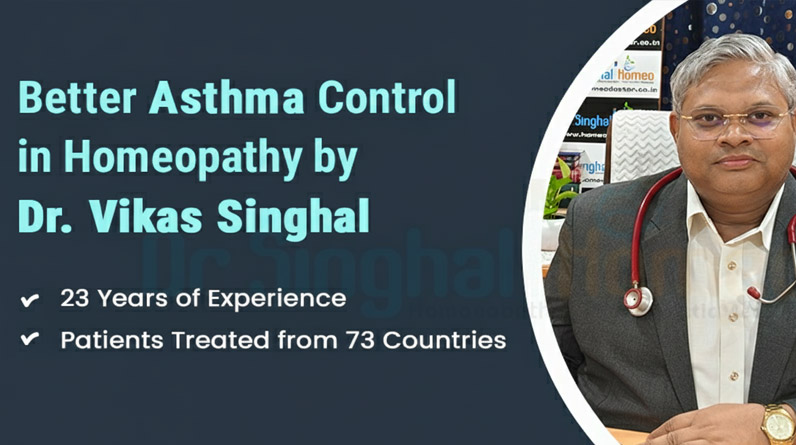
Dr. Vikas Singhal’s Experience in Treating Childhood Asthma
Dr. Vikas Singhal is a classical homeopathic doctor with 23 years of experience. He specialises in chronic, autoimmune, lifestyle, and rare diseases and treats asthma patients across 73 countries.
He offers online and offline consultations, medicine delivery, and personalised homeopathic treatment plans rooted in classical homeopathy and complementary medicine principles.
Want to learn more about the scope of Asthma homeopathic treatment for your child or book a consultation? Call or WhatsApp: +91 9056551747.
Frequently Asked Questions
Q1: What is the permanent treatment for asthma?
Ans: Asthma is generally considered a long-term condition. However, many patients who have undergone well-supervised homeopathic treatment report being symptom-free or medication-free for years after completing treatment, due to improved internal balance and trigger tolerance.
Q2: How to treat asthma in toddlers?
Ans: Asthma treatment for toddlers should be gentle and carefully monitored. Along with identifying triggers and maintaining a supportive environment, personalised approaches like homeopathy are often chosen to support immunity and overall development under professional guidance.
Q3: Which treatment is best for asthma, homeopathy or allopathy?
Ans: Both systems serve different purposes. Allopathy is crucial during acute episodes, while homeopathy is commonly used as a long-term, individualised approach aimed at reducing dependency and improving overall respiratory stability over time.
Q4: What is the success rate of homeopathy?
Ans: Homeopathy does not follow a fixed success rate. Outcomes vary depending on the child’s symptom pattern, triggers, overall health, and consistency of treatment and follow-ups with a qualified homeopathic doctor. However, when compared to other systems, homeopathic treatments are known to offer significantly better results with sustained results.
Q5: What is the best medicine for asthma in children?
Ans: There is no single best medicine for all children. In homeopathy, medicines are selected individually based on each child’s specific symptoms, sensitivities, and triggers, and should always be prescribed by a qualified professional.