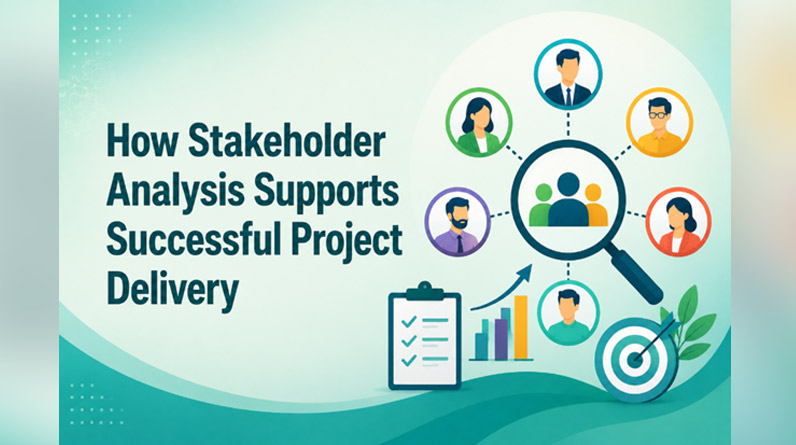
Have you thought that some projects move smoothly from planning to completion while others face delays and unexpected challenges? Success depends on how well project teams understand the people affected by the project. Professionals taking an ACCA Course learn the importance of analysing information before making decisions. The same principle applies to project management. Understanding What is a Stakeholder helps organisations identify the individuals and groups who can influence project outcomes. Effective stakeholder analysis creates stronger communication and improved project results.
Let us explore how stakeholder analysis supports successful project delivery.
The Role of Stakeholder Analysis in Successful Project Delivery
Below are the key roles that Stakeholder Analysis contributes to smoother project execution and stronger project outcomes:
Helps Identify Key Project Stakeholders
Each and every project contains individuals who have varying levels of influence, interests, and expectations that they bring to the table. Certain stakeholders are responsible for making decisions, while others are directly impacted by the results of the project.
Project teams are able to discover these persons and groups earlier with the assistance of stakeholder analysis. By doing so, a more precise comprehension of who requires attention over the entirety of the project lifetime is achieved, and the possibility of overlooking significant stakeholders is diminished.
Improves Project Communication
Problems with communication are one of the most typical reasons why projects cannot be completed successfully. When teams have a thorough understanding of the requirements of stakeholders, they are able to deliver the appropriate information to the appropriate individuals at the appropriate time.
Effective communication helps to establish confidence and ensures that stakeholders are kept up to date on the progress of the project as well as significant changes. During the course of a project, professionals who are registered in an ACCA Course frequently build skills in communication and analysis that are necessary for their effective involvement with stakeholders.
Supports Better Decision Making
It is common for projects to need decisions that will have an impact on various stakeholders. By gaining knowledge of the expectations and concerns of stakeholders, project managers are able to make decisions that are more balanced.
The use of this strategy helps to reduce the likelihood of conflicts and guarantees that project decisions are in line with broader business goals and the interests of stakeholders. Professionals can also benefit from the knowledge gained through an ACCA Course, which can help them assess information more effectively and enable them to make informed decisions regarding projects.
Reduces Project Risks
Unanticipated reactions or concerns from stakeholders are the source of many hazards associated with projects.
With the help of stakeholder analysis, project teams are able to spot possible problems before they escalate into more catastrophic circumstances. It is much simpler to address concerns, manage expectations, and limit the likelihood of interruptions occurring during the delivery of the project when such understanding is received early on.
Helps Manage Expectations Effectively
In many cases, the priorities and expectations of many stakeholders are distinct from one another.
The failure to properly manage these expectations might result in unhappiness and conflict between the parties involved. Project teams are able to better grasp the requirements of stakeholders and present more realistic outcomes with the assistance of stakeholder analysis. This contributes to the development of stronger ties and enhances overall satisfaction with the project.
Strengthens Project Planning
In order for initiatives to be successful, rigorous planning must begin from the very beginning.
It is possible for project managers to establish more successful project plans by first gaining an understanding of the influence and interests of stakeholders. With this knowledge, teams are able to more properly allocate resources and prepare for obstacles.
Encourages Stronger Team Collaboration
Collaboration across departments and external partners is necessary to complete projects. A better understanding of What is a Stakeholder enables project teams to identify the individuals and organisations that impact the project’s outcomes. The management of stakeholders that is effective encourages open communication and collaboration among all of the parties involved. Better collaboration makes it easier to solve problems and assists project teams in working toward achieving shared objectives.
Improves Change Management
Changes are commonly a part of projects, and these changes can have a variety of effects on stakeholders. Project Managers are able to identify individuals who may be affected by change and address their concerns in a proactive manner when they have a solid understanding of What is a Stakeholder. People are more open to change when they understand its reasons and benefits. Project teams can develop communication methods that enhance acceptance and reduce resistance if they recognise stakeholders’ concerns early.
Conclusion
Projects succeed when organisations focus not only on tasks and deadlines but also on the people who influence those outcomes. Stakeholder Analysis helps teams identify key stakeholders, improve communication and manage expectations more effectively. Understanding What is a Stakeholder provides a strong foundation for building productive relationships and supporting project success. Developing these analytical and management skills through an ACCA Course can strengthen professional capabilities.
MPES Learning helps learners build practical knowledge that supports effective decision-making across a wide range of business and project environments.