With the rising cost of medicines and hospitalisation, having an appropriate health insurance plan in India has become crucial. Therefore, individuals and families must carefully compare options before making a choice.
While the Indian insurance market offers a wide range of insurers and plans, the challenge lies in finding the one that best fits one’s healthcare needs and long-term priorities. Effective comparison saves money while ensuring smoother claims and better coverage during medical emergencies.
Today, digital platforms make it easier to buy health insurance online, compare premiums, and explore different types of health insurance suited to individual and family needs.
Here is a detailed outline of essential tools and practical tips for efficiently and effectively comparing health insurance plans in India. Keep reading for a detailed insight.
What are the Key Factors to Consider While Comparing Health Insurance?
The key points to consider when comparing health insurance are listed below:
• Coverage and Benefits
Coverage is the core of any policy; compare various inclusions, such as hospitalisation, pre- and post-hospitalisation expenses, daycare procedures, AYUSH treatments, domiciliary care, and even organ donor coverage. The more extensive the coverage, the lower the out-of-pocket costs in an emergency.
• Sum Insured
Choosing an adequate sum insured is vital when residing in metropolitan cities. Compare the premium-to-coverage ratio to decide on the most economically viable option.
• Network Hospitals
A large network of cashless hospitals ensures faster, hassle-free treatment. When comparing plans, check whether your preferred hospitals are in the insurer’s cashless network. Star Health Insurance, for example, has over 14,000 network hospitals across India where they’ve reported a 97% final cashless approval rate within 3 hours.
• Waiting Periods
All health insurance plans have some waiting period for pre-existing conditions, maternity benefits, and other specified medical issues. A plan with a shorter waiting period is usually more convenient, especially for people with pre-existing health problems.
• Room Rent Limits
Room rent capping also plays an important role in determining your total hospital bill. Some insurance plans cap room rent at a percentage of the sum insured or at a fixed amount per day. Selecting a plan that does not limit room rent will avoid many unwanted surprises.
• Co-Payment Clauses
A co-payment requires he insurance policyholder to pay a specified percentage of the claim amount. While this may lower the premium, it increases out-of-pocket expenses at the time of a claim. If you want fuller financial protection, compare plans with minimal or no co-payment.
• Sub-Limits and Exclusions
Some policies also offer sub-limits on specific treatments, including cataract surgery, knee replacement, and ambulance charges. Always review the sub-limits and exclusions to avoid any surprises during claim settlement.
• Premium and Affordability
The premiums would vary based on age, sum insured, family size, coverage features, and additional benefits. Rather than seeking the lowest premium, one should be concerned with value for money: sufficient coverage at reasonable costs.
• Claim Settlement Ratio and Service Quality
Other factors of an insurance provider include the claims settlement ratio and service quality reputation. Always be wary of those who offer timely handling of claims, assistance, and continuous transparency.
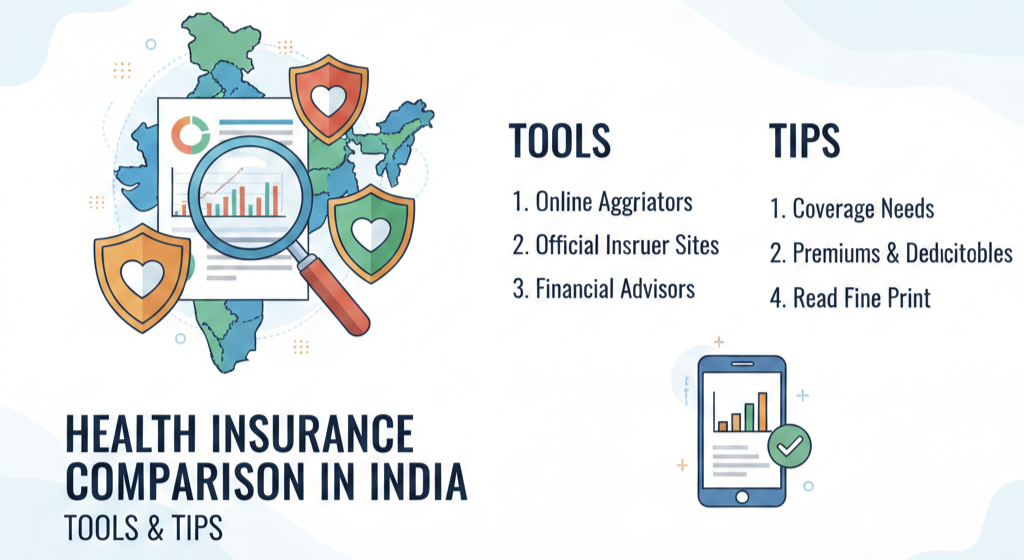
What are the Valuable Tools for Comparing Health Insurance in India?
Comparing health insurance has become easier with modern platforms that analyse premiums and benefits. Some of them include:
1. Online Comparison Portals
Websites like Policybazaar, Coverfox, and BankBazaar let you compare multiple plans at once. You can view premiums, inclusions, exclusions, and add-ons all on a single interface.
Numerous websites exist that enable users to compare several plans at the same time. You can examine premiums, inclusions, exclusions, and add-ons all within a single interface.
2. IRDAI Website
IRDAI offers trustworthy regulatory data, standardised brochures, consumer alerts, insurers’ claim settlement information, and annual reports. This helps you verify insurer claims and make impartial comparisons.
3. Insurer Websites
When you shortlist a few plans, visit the official websites of those specific insurers to review the policy details, terms and conditions, and detailed brochures. Direct information from the insurer helps clarify specific clauses.
4. Mobile Apps
Most insurance providers and comparison websites offer mobile apps that enable users to quickly calculate premiums, compare coverage options, and manage their policies. These are especially useful for policyholders who prefer digital access.
5. Premium Calculators
The health insurance premium calculators will help you estimate coverage costs based on your age, location, family size, and sum insured. These tools assist in budgeting and comparing affordability among insurers.
Tips for Smart Health Insurance Comparison
Choosing the right health insurance becomes easier when you compare carefully, so here are some essential tips:
1. Define Your Requirements First
Write down all your needs: family size, health conditions, future requirements, preferred hospitals, and your budget. This way, you can eliminate plans that aren’t suitable for you right from the start.
2. Compare Policy Wordings, Not Just Brochures
Brochures highlight but might omit key details. Always review the detailed policy wording to understand the fine print.
3. Avoid Choosing Solely Based on Premiums
Low premiums often result in higher co-pays, longer waiting periods, or reduced coverage. Prioritise benefits over price.
4. Check Add-Ons Carefully
Additional benefits include maternity coverage, outpatient benefits, and critical illness riders, which provide extra protection but at a higher premium. Compare their importance and cost-effectiveness.
5. Look for Lifetime Renewability
A lifetime renewable plan guarantees coverage in old age when medical needs rise.
6. Evaluate Long-Term Value
Also, consider how the plan performs over time, including premium increases, claim processing, and customer service.
Comparing health insurance in India is crucial for selecting a policy that offers robust financial protection, comprehensive coverage, and long-term reliability. Today, consumers have access to various tools, including comparison websites, insurer portals, customer reviews, and IRDAI reports, to make informed decisions.
When evaluating coverage, waiting periods, premiums, claim settlement history, and long-term value, individuals and families can choose a plan that suits their needs. By taking a structured approach and thoroughly comparing options, you can confidently find the right coverage for your health and financial security.