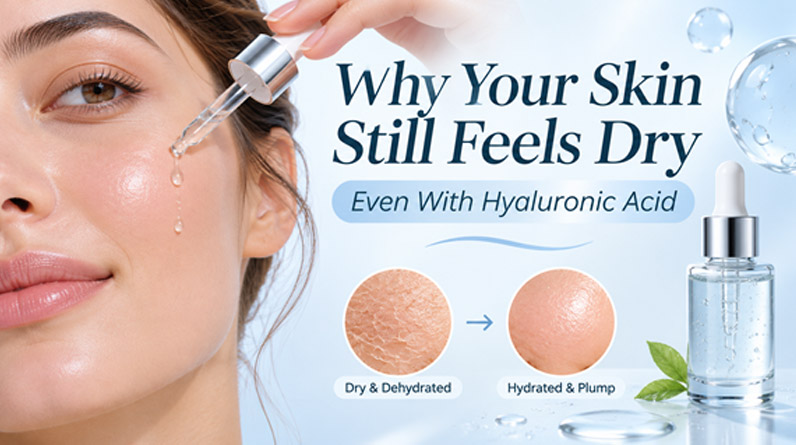
You bought the hyaluronic acid serum everyone talks about. You use it every morning. And by lunchtime, your skin still feels tight. Maybe it even looks a little flaky around your nose.
If that sounds familiar, you’re not using a bad product. You’re probably just using a good one the wrong way. Hyaluronic Acid Serum is brilliant, but it has a few rules, and most of us were never told them.
Let’s fix that.
First, What Does Hyaluronic Acid Actually Do?
Think of hyaluronic acid as a sponge. It grabs water and holds it in your skin, which is why skin looks plumper and smoother right after you apply it.
Here’s the catch: a sponge can only hold water if there’s water around to grab. And once it’s full, something has to stop that water from escaping.
That’s where most routines go wrong.
Mistake 1: Putting It on Dry Skin
This is the big one. When you apply hyaluronic acid to a completely dry face in a dry room, it has nothing to pull water from except the deeper layers of your skin. Over time, that can leave your skin feeling even drier than before.
The fix: apply it to damp skin. After washing your face, pat it gently with a towel but leave it slightly wet. Or mist your face with water first. Then press in 2–3 drops of serum.
It sounds small. It makes a real difference.
Mistake 2: Skipping Moisturizer Afterward
A lot of people think a hydrating serum is enough on its own. It isn’t. Hyaluronic acid draws water in, but it doesn’t seal it in. Without a moisturizer on top, that water simply evaporates, especially in air-conditioned rooms or dry winter weather.
The fix: always follow with a moisturizer, even if your skin is oily. Look for one with ceramides. They act like a lid, keeping all that hydration where it belongs. Many brands now pair the two on purpose. For example, Dermasation, a skin care brand in Pakistan, builds ceramides and hyaluronic acid into its moisturizers, because the two work far better together than apart.
Mistake 3: Ignoring the Sun
This one surprises people. What does sunscreen have to do with dry skin?
Quite a lot, actually. Sun exposure weakens your skin barrier, the outer layer that keeps moisture in. A damaged barrier leaks water all day long, so no amount of serum can keep up. UV rays also break down the skin’s own natural hyaluronic acid over time.
So if you’re hydrating your skin every morning and then walking out into strong sun without protection, you’re filling a bucket with a hole in it.
The fix: make sunscreen the last step of your morning routine, every single day. A lightweight, hydrating sunscreen spf 50 works well on top of hyaluronic acid and moisturizer, and it won’t feel heavy in the heat.
The American Academy of Dermatology recommends a broad-spectrum sunscreen with SPF 30 or higher for daily use, so SPF 50 gives you a comfortable margin, especially in hot, sunny climates.
Mistake 4: Using Too Much
More serum doesn’t mean more hydration. Two or three drops are enough for your whole face. Using half the bottle at once just leaves a sticky layer that pills under your sunscreen and makeup.
Mistake 5: Expecting It to Fix Everything
Hyaluronic acid is a hydrator. It’s great at making skin feel soft and look plump. But it won’t clear acne, fade dark spots or remove dead skin. If your skin also looks dull or rough, you may need a gentle exfoliant a few nights a week alongside it.
Knowing what each product does helps you stop blaming the wrong one.
A Simple Routine That Actually Works
Here’s a morning routine that lets hyaluronic acid do its job properly:
- Wash your face with a gentle cleanser.
- Pat dry, leaving your skin slightly damp.
- Press in 2–3 drops of hyaluronic acid serum.
- Apply a moisturizer to seal it in.
- Finish with SPF 50 sunscreen.
At night, skip the sunscreen and keep the rest the same.
How Long Before You Notice a Difference?
Most people feel softer, more comfortable skin within a few days of fixing these habits. After two to three weeks, skin usually looks smoother and stays hydrated through the day, not just for the first hour.
The Bottom Line
Hyaluronic acid isn’t magic, but it’s close when you use it right. Apply it to damp skin, seal it with moisturizer, and protect everything with sunscreen. Those three small changes are usually all it takes to go from “my serum isn’t working” to “my skin finally feels good.”
Your skin doesn’t need more products. It just needs the right order.