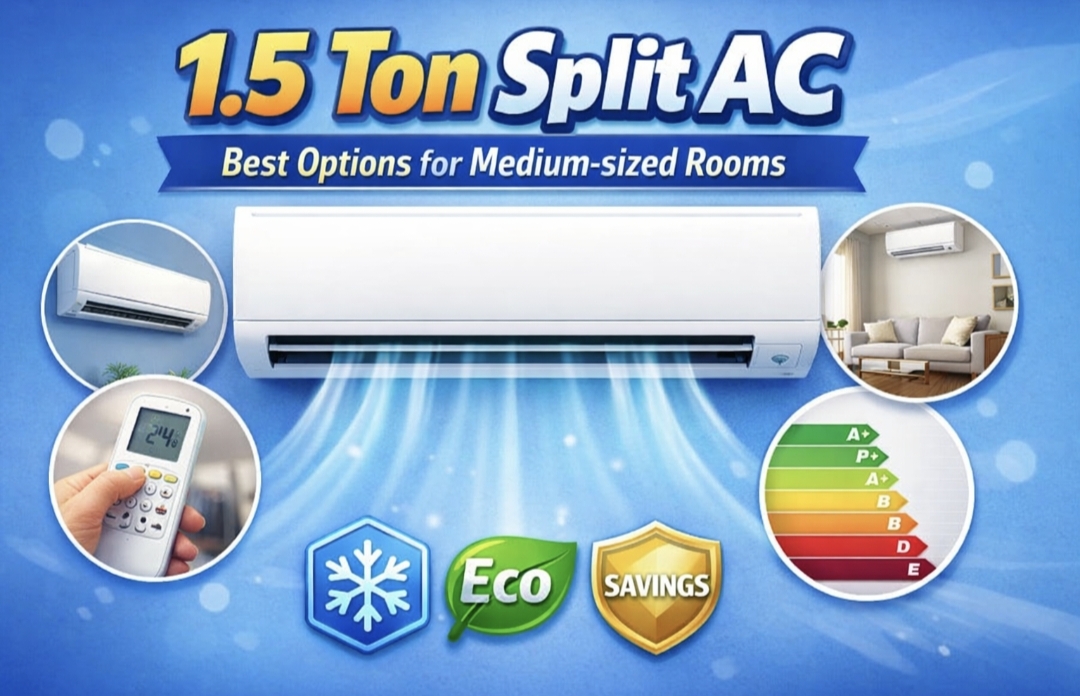
Maintaining a comfortable indoor temperature is essential for productivity, relaxation, and overall well-being. With summer months becoming increasingly warm, selecting the right air conditioner can make a significant difference in energy efficiency and daily comfort.
For medium-sized spaces, a 1.5 ton split AC is often considered a practical choice due to its balanced cooling capacity and energy use. However, selecting the right model requires a closer look at essential features, room requirements, and usage patterns.
With multiple options available, understanding what truly matters can simplify the decision-making process. This blog explores important aspects to help you evaluate and choose a 1.5 ton split AC that fits your needs.
Why a 1.5 Ton Split AC Works for Medium-sized Rooms
A 1.5 ton split AC is typically suitable for spaces ranging from 100 to 150 square feet, making it a versatile option for bedrooms, home offices, and small living rooms. This tonnage ensures the room cools efficiently without overtaxing the compressor or drawing excessive power.
Unlike window units, split ACs separate the indoor and outdoor components. This separation allows for quieter operation and more even air distribution. A properly installed 1.5 ton split AC also enhances room aesthetics, blending seamlessly with contemporary interiors without dominating the space.
The combination of comfort, efficiency, and subtle design makes it a popular choice for medium-sized areas.
How to Choose the Best 1.5 Ton Split AC
When evaluating models, consider features beyond basic cooling. The right combination of technology, efficiency, and durability can improve both performance and user experience.
- Inverter Technology
Inverter compressors adjust their speed according to cooling demand. This reduces electricity consumption and maintains consistent indoor temperatures. Compared to fixed-speed units, inverter-equipped 1.5 ton split ACs offer smoother operation and long-term energy efficiency.
- Energy Efficiency Ratings
Higher star ratings indicate lower electricity use. While a model with advanced energy efficiency may have a higher upfront cost, it can significantly reduce monthly bills over time. Evaluating efficiency ratings helps balance performance with sustainable energy use.
- Air Filtration Systems
Modern ACs often feature multi-layer filters, such as PM2.5 and high-density options. These filters remove dust, pollen, and other airborne particles, improving indoor air quality. For urban environments, this feature contributes to a healthier living space.
- Smart Features
Intelligent features such as AI-based cooling, self-diagnosis, and memory function enhance ease of use and overall performance. These capabilities allow the AC to adjust settings based on usage patterns, detect potential issues, and retain preferred configurations. Together, they contribute to a more responsive and efficient cooling experience while reducing the need for manual adjustments.
- Durability Enhancements
Look for units with copper condensers, anti-corrosion coatings, and self-diagnosis systems. Such features extend the lifespan of your AC and reduce maintenance needs, offering peace of mind for long-term use.
- Cooling Performance and Airflow
Effective cooling depends not just on tonnage but also on airflow design. A high-quality 1.5 ton split AC should provide multi-directional swing, ensuring even temperature distribution. Some models include turbo modes for rapid cooling, particularly useful during peak summer conditions.
- Installation Considerations
Proper installation is critical. The indoor unit should be placed to allow optimal air circulation, while the outdoor unit requires sufficient ventilation. Professional installation ensures correct positioning, piping, and insulation, contributing to efficiency and reliable performance.
- Maintenance and Longevity
Routine maintenance keeps your AC operating efficiently. Cleaning filters, checking refrigerant levels, and inspecting coils prevent wear and extend lifespan. Many modern systems include filter clean reminder features, simplifying upkeep and avoiding unexpected issues.
- Price Consideration
The 1.5 ton split air conditioner price varies depending on features, brand positioning, and energy ratings. Instead of focusing only on the initial price, it is useful to consider overall value by factoring in efficiency, durability, installation charges, and long-term operating costs.
- Noise Levels and Comfort
A quiet operating environment is essential, especially for bedrooms and workspaces. Advanced compressors and insulation techniques reduce operational noise, making the 1.5 ton split AC ideal for uninterrupted relaxation or focused work.
- Environmental Considerations
Eco-friendly refrigerants and energy-saving modes make modern ACs more sustainable. Selecting a unit with environmentally responsible features helps reduce your carbon footprint while maintaining performance. Optimized cooling modes deliver comfort without unnecessary energy consumption, supporting both efficiency and sustainability.
Finding the Perfect Balance of Performance and Efficiency
Selecting the right air conditioner requires careful evaluation of cooling capacity, efficiency, and long-term reliability. For medium-sized rooms, a 1.5 ton split AC offers the flexibility to maintain consistent comfort while balancing energy usage.
By considering factors such as inverter technology, star ratings, and smart features, you can identify a model that aligns with your living space and usage patterns. Proper installation and regular maintenance further ensure optimal performance and longevity.
While exploring options, many electronic brands, such as Kelvinator, offer models designed to meet diverse needs. Compare specifications carefully, assess your room requirements, and choose a model that best fits your long-term cooling needs.