Key Takeaways
- Protecting a home from storms requires careful planning and durable, storm-resistant materials.
- Reinforced concrete and insulated concrete forms provide strong, energy-efficient structural support.
- Structural insulated panels (SIPs) offer stability, thermal insulation, and quick installation.
- Weathering steel resists corrosion and adapts to harsh weather and seismic activity.
- Impact-resistant windows, doors, and hurricane-rated garage doors shield openings from debris.
- Fiber-cement siding and metal roofing provide long-lasting exterior protection with low maintenance.
- Advanced insulation and moisture barriers prevent water intrusion and maintain indoor air quality.
- Using these materials enhances home resilience, safety, and long-term value during extreme weather.
Protecting your home from storm damage involves careful planning and smart investment in durable materials. More than just a matter of aesthetics, material choice directly affects how well your home withstands the harsh elements of extreme weather. When severe storms, hurricanes, or high winds strike, your family and property need the best possible protection. For advice on immediate storm recovery needs and restoration services, visit this website.
As climate events become more unpredictable, resilience is no longer just an aspiration but a necessity for homeowners. Using the right construction materials ensures your house stands strong, retains value, and provides security during disasters. Durable choices can also reduce maintenance costs and insurance premiums. Selecting state-of-the-art resilient materials minimizes risk and disruption, offering long-term peace of mind.
Understanding which materials are truly storm-ready can help you prioritize areas for upgrading during repairs or new builds. Modern building science and advances in engineering offer options that go far beyond standard wood or traditional siding. Choosing robust materials suited to your environment makes all the difference when severe weather hits.
Storm-resilient construction does more than defend against property loss; it provides a stable setting for recovery and normalcy in the aftermath. Each upgrade, from reinforced concrete to advanced weather barriers, yields lasting benefits for safety and comfort.
Reinforced Concrete: The Backbone of Durability
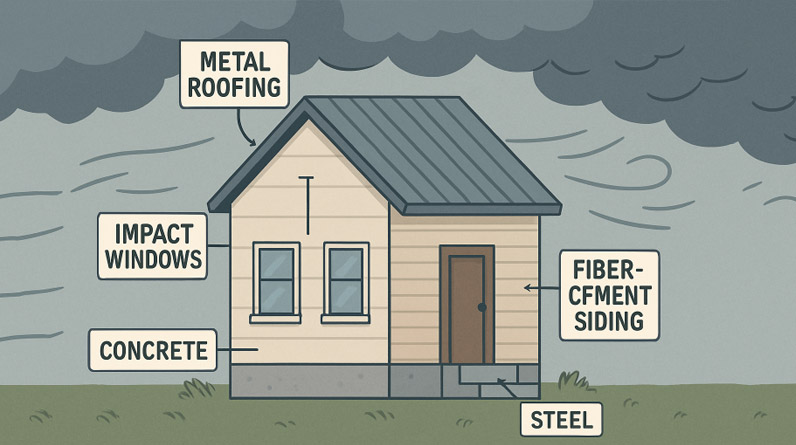
Reinforced concrete remains an essential material for building foundations and critical structural supports in storm-prone regions. With the integration of steel rebar, concrete can withstand immense pressures from high winds and flooding. Insulated concrete forms (ICFs) provide additional resistance not only to wind and water but also to fire and temperature extremes. They create an energy-efficient barrier that improves comfort and lowers utility costs.
Structural Insulated Panels (SIPs): Strength and Efficiency Combined
Structural insulated panels have gained popularity for delivering both stability and energy efficiency. Consisting of an insulating foam core bonded between rigid panels, SIPs serve as strong, lightweight walls and roofs. They provide thermal insulation, withstand deformation during storms, and install quickly, often reducing construction time and waste.
Weathering Steel: Corrosion-Resistant and Flexible
Weathering steel is engineered to resist corrosion and withstand the harsh conditions of outdoor environments. Its surface naturally develops a rust-like patina that acts as a shield against further degradation, making it ideal for coastal and flood-prone settings. This steel is also flexible, offering an added layer of safety in earthquake-prone areas, while holding up well against hail, snow, and strong winds.
Impact-Resistant Windows and Doors: Shielding Against Debris
Your home’s openings are often the most vulnerable areas in a storm. Impact-resistant windows and doors offer crucial protection from debris propelled by hurricane-force winds. These products use sturdy frames and multiple layers of laminated glass, absorbing shocks without shattering. Proper installation of these features can prevent breaches, ensuring the home’s envelope remains sealed and reducing the risk of catastrophic interior damage. According to the New York City Homeowner Handbook, upgrading openings is a vital component of effective storm preparation.
Fiber-Cement Siding: A Robust Exterior Choice
Fiber-cement siding is valued in humid, storm-prone, and coastal areas for its durability and resistance to rot, warping, and insects. Unlike wood or vinyl, fiber-cement withstands intense water exposure and high-impact debris. It can be manufactured to replicate the look of traditional siding without the same maintenance demands, offering superior curb appeal and longevity for homeowners.
Metal Roofing: Longevity and Resistance
A metal roof with a marine-grade coating delivers a longer service life, particularly in salt-laden coastal environments. Metal roofing endures severe wind pressure, resists corrosion and fire, and often exceeds local building codes for impact resistance. Over its lifespan, metal roofing requires minimal maintenance and may qualify homeowners for lower insurance rates due to its weather resilience.
Advanced Insulation and Moisture Barriers: Preventing Water Intrusion
Closed-cell spray foam insulation not only boosts your home’s energy performance but also adds structural strength. Used alongside advanced moisture barriers and weather-tight sealants, closed-cell spray foam forms a robust defense against water intrusion. These layers ensure the integrity of your home’s envelope, helping prevent mold growth and preserving indoor air quality even after severe weather events.
Hurricane-Rated Garage Doors: Securing Large Openings
Garage doors are commonly the weak point in a storm, offering a large surface area that strong winds can easily penetrate or damage. Installing hurricane-rated garage doors transforms your garage from a liability into a protective asset. These doors are reinforced to withstand uplift, pressure changes, and flying debris, preventing structural compromises to the entire home during a severe storm.
Final Thoughts
Selecting the right combination of materials ensures your home is not just beautiful but ready for any challenge nature might bring. By prioritizing durability and proven performance in your upgrades, you safeguard both your property and your family’s well-being for years to come.