Key Takeaways
- Successful commercial interior design in Singapore begins with strong brand presence in the entrance and reception zone.
- Effective layouts guide both customer and staff movement to reduce friction in everyday use.
- Well-designed commercial spaces balance flexibility, wellness, technology integration, and strict safety compliance.
Introduction
Many businesses recognise the moment when their physical space stops supporting the way they work or serve customers. Commercial interior design in Singapore plays a decisive role in how offices operate and how retail environments influence purchasing behaviour. When companies plan renovations or new premises, they face decisions about layout, brand presence, technology integration, and regulatory compliance. A well-considered design strategy allows commercial interior design in Singapore to support daily operations while strengthening the experience for employees and visitors.
1. Brand Immersion in the First Ten Seconds
The first visual impression of a space carries significant influence over how people interpret a brand. When visitors step into an office reception area or approach a retail entrance, they begin forming assumptions about professionalism, credibility, and identity within seconds. Designers treat this moment as an opportunity to communicate brand values through materials, lighting, colours, and spatial composition.
Commercial interior design in Singapore frequently prioritises entrance zones because they function as the most visible expression of the company. A retail storefront might present product storytelling through displays, while an office lobby may communicate trust and expertise through restrained yet confident design choices. The goal is not decoration alone but visual clarity that reflects how the organisation wants to be perceived.
2. Optimising the Customer and Staff Journey
A well-designed commercial space recognises that people move through it with specific intentions. In retail environments, shoppers navigate displays while searching for products, promotions, and payment counters. In offices, employees travel between desks, meeting areas, collaboration zones, and quiet workspaces. Design planning studies these patterns to create logical movement paths.
Commercial interior design in Singapore addresses this need by mapping circulation routes before construction begins. Designers evaluate potential bottlenecks, awkward intersections, and congested areas that slow movement. By adjusting furniture placement, aisle width, and spatial zoning, the layout encourages smoother navigation. This approach improves productivity in offices while supporting a more comfortable shopping experience in retail environments.
3. Multi-Functional and Flexible Spaces
Modern commercial environments rarely operate under a single fixed purpose. Offices host training sessions, informal meetings, presentations, and collaborative discussions throughout the day. Retail spaces occasionally support workshops, product launches, or community events outside traditional sales hours. Flexibility, therefore, becomes an important design priority.
Commercial interior design in Singapore increasingly integrates adaptable furniture, movable partitions, and modular layouts to support different activities within the same area. A pantry may convert into a discussion space during team meetings, while a retail floor may shift to accommodate promotional displays. Flexible planning allows businesses to adjust their environment without repeated renovation, making the space more resilient to changing operational needs.
4. Biophilic Elements and Workplace Wellness
Interior environments influence how people feel and function during long working hours. Many organisations recognise that well-designed spaces can improve comfort, concentration, and morale. As Singapore promotes its vision as a city surrounded by nature, interior spaces reflect this philosophy through design decisions that reconnect occupants with natural elements.
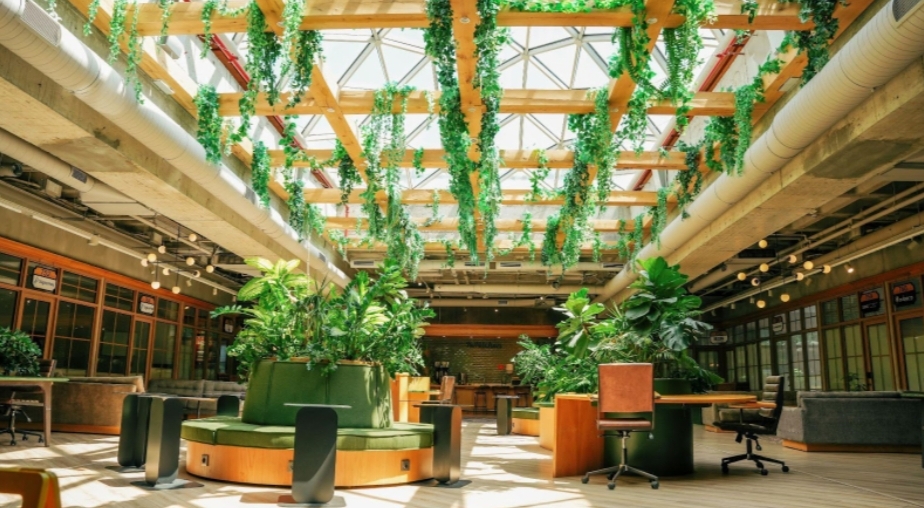
Commercial interior design in Singapore incorporates indoor plants, access to daylight, and natural materials such as wood or stone textures. These features soften the visual environment while creating a calmer atmosphere within busy commercial settings. Employees working in offices with greenery and natural light frequently describe a stronger sense of comfort compared with purely artificial environments. Retail customers may experience a similar effect, where a pleasant atmosphere encourages longer browsing time.
5. Seamless Technology Integration
Technology now supports many everyday interactions in offices and retail stores. Payment systems, inventory tracking, meeting technology, and digital displays all contribute to how a space functions. Effective design ensures these systems integrate naturally without overwhelming the environment.
Commercial interior design in Singapore addresses this by planning infrastructure early in the design process. Cabling routes, device placement, and equipment storage must align with the spatial layout. Retail spaces may include digital payment points or interactive screens, while offices integrate video conferencing technology within meeting rooms. When these features operate smoothly within the environment, technology enhances the experience without becoming visually intrusive.
6. Safety, Compliance, and Fire Code Requirements
Every commercial space must satisfy strict regulatory standards before opening to the public or employees. Fire safety systems, emergency exits, sprinkler coverage, and approved materials form essential components of the design process. Compliance, therefore, becomes one of the most important considerations during planning.
Commercial interior design in Singapore requires coordination with local building authorities and fire safety guidelines to ensure the finished space meets all requirements. Designers account for emergency egress paths, smoke control systems, and safe material selection while shaping the layout. Businesses benefit from addressing these requirements early because regulatory compliance protects occupants and prevents costly redesigns later in the project.
Conclusion
A commercial environment does more than house daily operations. It shapes how employees collaborate, how customers experience a brand, and how efficiently activities unfold throughout the day. Design decisions influence movement patterns, comfort levels, technological functionality, and regulatory readiness. When organisations approach commercial interior design in Singapore with clear priorities, they create environments that support work, engagement, and long-term adaptability.
Contact Ampersand Associates to explore our portfolio of high-performance commercial spaces across Singapore’s CBD and heartlands.