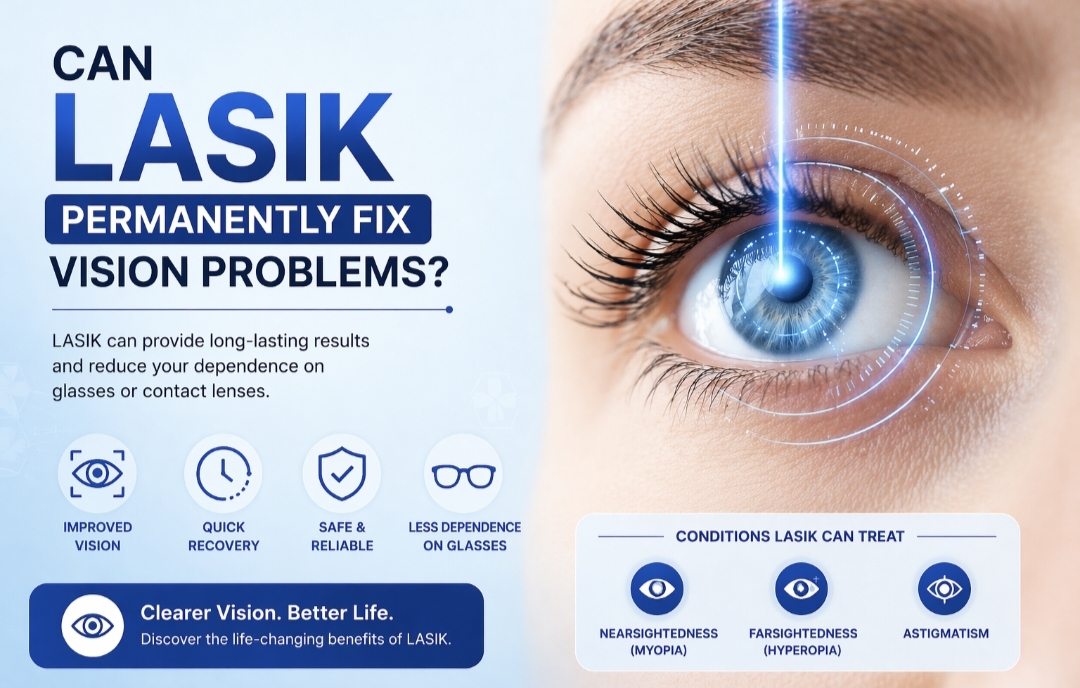
LASIK (Laser-Assisted In Situ Keratomileusis) is one of the most popular procedures used to correct vision problems such as nearsightedness, farsightedness, and astigmatism. Many people consider LASIK as a long-term solution to reduce or eliminate the need for glasses or contact lenses.
However, a common question remains: is LASIK a permanent fix for vision problems? While the procedure offers long-lasting results for many individuals, it is important to understand how it works, its limitations, and what to realistically expect over time.
This article explains whether LASIK provides permanent results and the factors that influence its long-term effectiveness.
What Is LASIK Eye Surgery?
LASIK is a type of refractive surgery that reshapes the cornea using a laser. The cornea is the clear front part of the eye that helps focus light onto the retina.
When the shape of the cornea is not ideal, it can cause blurred vision. LASIK corrects this by adjusting the corneal shape so that light is properly focused.
Conditions LASIK Can Treat
LASIK is commonly used to correct:
- Myopia (nearsightedness)
- Hyperopia (farsightedness)
- Astigmatism
By correcting these refractive errors, LASIK can improve visual clarity and reduce dependence on corrective lenses.
How Does LASIK Work?
LASIK involves creating a thin flap on the surface of the cornea and using a laser to reshape the underlying tissue. The flap is then repositioned, allowing the eye to heal naturally.
Key Steps in the Procedure
- Creating a corneal flap
- Reshaping the cornea with a laser
- Repositioning the flap
The procedure is usually quick, usually completed within minutes, and many patients notice improved vision within a short time.
Is LASIK a Permanent Solution?
LASIK permanently reshapes the cornea, which means the structural change made during the procedure does not reverse. In that sense, the correction itself is permanent.
However, this does not mean vision will remain unchanged for life.
Why Vision May Change Over Time
Several factors can affect vision after LASIK:
- Natural aging of the eyes
- Development of presbyopia (age-related difficulty in near vision)
- Changes in eye health
- Hormonal influences
While LASIK corrects existing refractive errors, it does not prevent new vision changes that may occur with age.
How Long Do LASIK Results Last?
For most individuals, LASIK results are long-lasting. Many people experience clear vision for years or even decades after the procedure.
Long-Term Expectations
- Stable vision for many years
- Reduced need for glasses or contact lenses
- Possible need for reading glasses later in life
The majority of patients achieve significant improvement in vision, though some may require minor enhancements over time.
In Mumbai, individuals exploring long-term vision correction options commonly consider consulting enters offering trusted LASIK treatment in Mumbai to understand suitability, expected outcomes, and long-term benefits.
Who Is a Good Candidate for LASIK?
Not everyone is suitable for LASIK. Proper evaluation is necessary to determine eligibility.
Ideal Candidates
- Adults with stable vision
- Individuals with healthy corneas
- Those without serious eye conditions
- People with realistic expectations
Who May Not Be Suitable
- Individuals with unstable vision
- People with certain eye diseases
- Those with very thin corneas
- Pregnant or breastfeeding individuals (in some cases)
A detailed eye examination helps determine whether LASIK is appropriate.
Benefits of LASIK Surgery
LASIK offers several advantages for individuals seeking freedom from glasses or contact lenses.
Key Benefits
- Improved vision clarity
- Quick recovery time
- Minimal discomfort
- Long-lasting results
- Reduced dependence on corrective lenses
These benefits make LASIK a popular choice for vision correction.
Risks and Limitations of LASIK
Like any medical procedure, LASIK has potential risks and limitations.
Possible Side Effects
- Dry eyes
- Glare or halos around lights
- Temporary vision fluctuations
- Sensitivity to light
Most side effects are temporary and improve over time, but it is important to discuss risks with an eye specialist.
Limitations to Consider
LASIK does not:
- Prevent age-related vision changes
- Guarantee perfect vision for everyone
- Eliminate the need for glasses in all cases
Understanding these limitations helps set realistic expectations.
Can LASIK Be Repeated?
In some cases, enhancement procedures may be performed if vision changes or if the initial correction is not sufficient.
When Enhancement May Be Needed
- Minor residual refractive errors
- Changes in vision over time
Enhancement procedures depend on corneal thickness and overall eye health.
Alternatives to LASIK
For individuals who are not suitable candidates for LASIK, other options are available.
Alternative Treatments
- PRK (Photorefractive Keratectomy)
- Implantable lenses
- Glasses or contact lenses
An eye specialist can recommend the most appropriate option based on individual needs.
Maintaining Eye Health After LASIK
Proper care after LASIK helps maintain long-term results.
Eye Care Tips
- Attend regular eye checkups
- Use prescribed eye drops
- Protect eyes from excessive screen strain
- Maintain a healthy lifestyle
Taking care of eye health supports lasting vision clarity.
Frequently Asked Questions
Is LASIK a permanent solution?
LASIK permanently reshapes the cornea, but natural changes in vision may occur over time due to aging.
Can vision return after LASIK?
Some individuals may experience minor vision changes over time, but most maintain improved vision for many years.
Does LASIK eliminate the need for glasses completely?
Many people no longer need glasses, but some may still require them for specific tasks, especially as they age.
Is LASIK safe?
LASIK is generally considered safe when performed by qualified eye specialists, with most patients achieving good outcomes.
How long does recovery take after LASIK?
Most people notice improved vision within a few days, with full recovery usually occurring within a few weeks.
Conclusion
LASIK is an effective and long-lasting solution for correcting common vision problems. While the procedure permanently reshapes the cornea, it does not stop natural changes in vision that may occur with age.
For many individuals, LASIK provides years of improved vision and reduced dependence on glasses or contact lenses. Understanding the benefits, limitations, and long-term expectations helps in making an informed decision.
Consulting an eye specialist and maintaining good eye care practices can ensure the best possible outcomes and long-term visual health.