No matter where you live or work, changing the design of your floors can make a room look completely different. Modern flooring choices are nice to look at, last a long time, and are easy to use. They let you make your home look better without having to do a lot of work. Modular carpet tiles are different from the others because they are flexible, easy to care for, and come in a lot of different styles.
If you’ve been thinking about getting new flooring, this guide will show you how to put carpet tiles over almost any existing surface. This will give your space a new, professional look.
1. Assess Your Existing Flooring
Before installing new flooring, you need to determine the kind of surface you have and how it is currently maintained. This helps you decide what to do next and keeps your new tiles from breaking. Carpet Floor Tiles can be placed on top of:
- concrete floors are completely dry and free of cracks.
- Wood floors: Make sure the planks are securely attached and the floor is even. Laminate: Surfaces that are clean work best.
- Put the old carpet in a pile: Carpets that are too thick should usually be thrown out.
- Look for cracks, warping, moisture, or places that aren’t even.
Two minor repairs that can improve the stickiness and appearance of the new flooring are to fill in any holes or sand down any high spots.
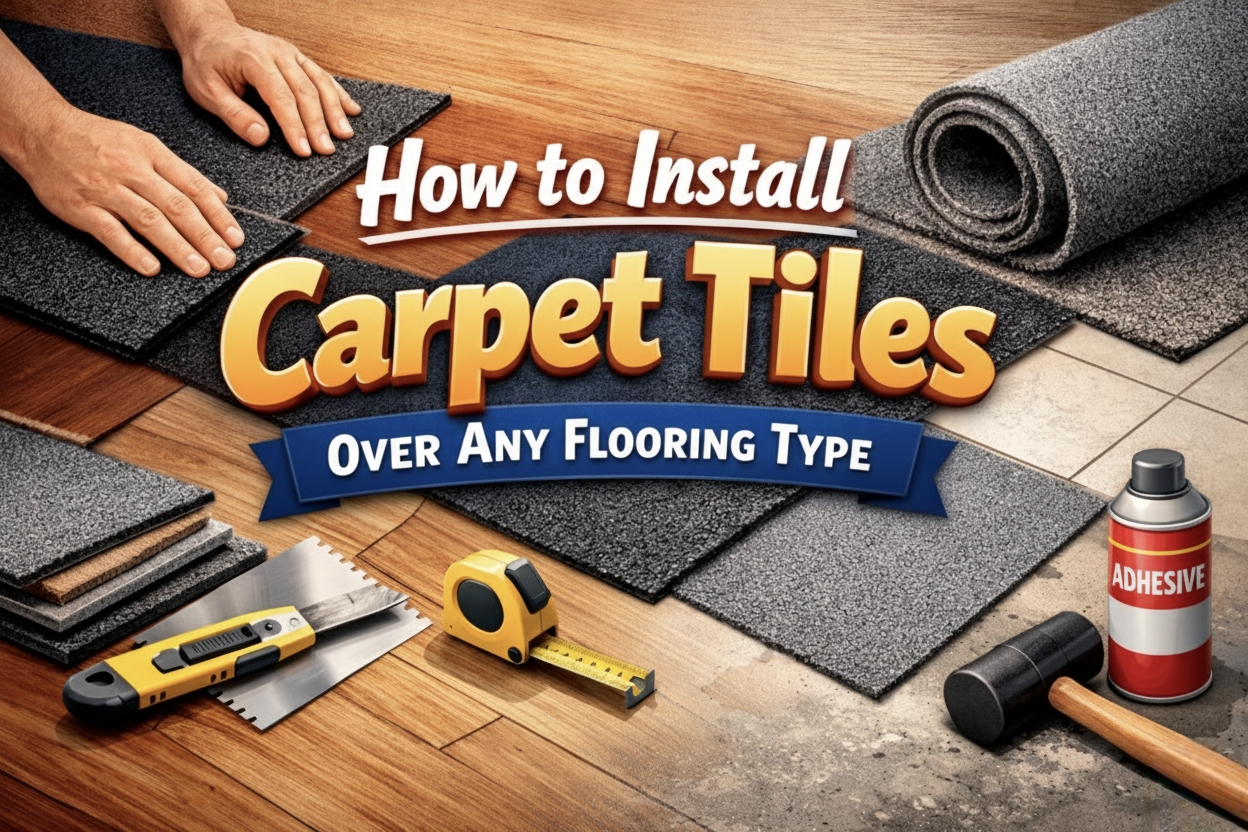
2. Gather Your Tools and Materials
Getting all the tools ready before starting the project will make the installation go more smoothly and quickly. A tape measure and a chalk line are common tools for getting things just right.
- Use a utility knife or carpet cutter to cut tiles.
- Use a straightedge or ruler to make sure your cuts are right.
- Adhesive or double-sided tape, depending on the type of tile.
- Use a vacuum cleaner or broom to clean the surface.
- Knee pads will help you stay comfortable while you work.
A little planning ahead of time stops mistakes and makes sure the final product looks neat and professional.
3. Plan Your Layout
Planning how the tiles will fit together is an important step. A good design cuts down on waste of materials. Assures a look that is pleasing to the eye.
- To find out how many tiles you need, measure the room.
- Use the center point as a guide to get started.
- Lay short lengths of rows without mortar to determine how all the pieces will fit together.
This is very important when your tiles have designs on them. It keeps the floor nice by preventing the tiles from chipping or leaving gaps along the walls.
4. Prepare the Floor Surface
For results that last a long time, the surface needs to be smooth and clean.
- Use a vacuum or a broom to clean up dirt and dust.
- Repair any cracks, holes, or uneven spots.
- Make sure the floor is dry; if it’s wet, things won’t stick as well.
- Some types of floors, like concrete or plywood, need a primer if the manufacturer says to.
If you prepare the surface correctly, your tiles will stick well and stay flat over time. This lowers the chance of the edges lifting.
5. Learn How to Install Carpet Tiles
It’s easy to set up tiles, but doing it right makes them look polished:
- The glue-application method: Use a trowel to spread the glue evenly over a surface. Put each tile in the right place. Put pressure on it.
- Peel and stick technique: Remove the backing for the peel and stick method. Make sure the tile fits with your design by firmly placing it on the floor.
Tip: Always work in small sections so that the glue doesn’t dry out before the tiles are in place.
6. Install Carpet Floor Tiles
To get the best results when Install laying Carpet Floor Tiles Steps , do the following:
- To keep things in balance, start in the middle of the room and work your way out.
- Use a straightedge or chalk line to make sure the rows are straight.
- Check the alignment often to make sure things don’t get mixed up.
- Use a sharp utility knife to cut tiles for corners or edges.
The tiles will stick properly if you keep the pressure on them, and the alignment will make the finish look clean and professional.
7. Press and Secure the Tiles
Now that they are all in place, it’s time to make sure the tiles are safe:
- Go over the tiles with a floor roller, pressing down on them evenly so that all of the tiles stick with glue.
- Check seams and edges before glue dries, making changes that are needed. Usually, it heals in 24 to 48 hours.
- Next, follow the manufacturer’s instructions as to how long it needs to cure.
When tiles are properly pressed and cured, they last longer because they don’t move over time.
8. Tips for Maintaining Carpet Tiles
If you want to extend the life of your flooring, regular maintenance is essential.
- Vacuum regularly to remove dust and debris.
- Use a light detergent to clean up spills right away and blot them instead of rubbing them.
- Rotate tiles periodically in high-traffic areas to distribute wear evenly.
If you follow these easy steps, you can keep your floor looking new and avoid damage.
9. Advantages of Modular Flooring
Carpet tiles have some benefits over regular flooring:
- If a tile breaks, you can replace it with a single tile.
- They let you mix colors and designs.
- Make things quieter and more comfortable.
- Faster installation than wall-to-wall carpeting or other flooring.
These advantages make modular tiles a smart choice for residential, office, or commercial spaces alike.
10. Safety and Finishing Touches
- To keep your project safe and looking good:
- before you start to keep your project safe and looking good.
- Keep the workplace clean. When you mount it, the room should be very clean.
- Add a level of trim or baseboards around the edges to create a more finished look on your flooring project.
- Baseboards or trim are added to the edges of your flooring project to give it that finished look.
- All these small things make your project look finished.
Carpet tiles offer an attractive and functional means of renovating any room. With the proper preparation, laying, and fitting procedure, even a novice can achieve professional results. Putting in a floor makes the area more comfortable and usable, to say nothing of its looking better. Modular carpet tiles are long-lasting, attractive options that work very well in modern homes. You can use them to improve a home office, a store, or a business space.