It happens after an otherwise successful weekend update. The new pendant is centred, the cord length looks right, and the shade fits the room beautifully in daylight. By evening, however, something feels off. The dining table is covered in distracting shadows, the bulb shines directly into everyone’s eyes, or the kitchen island looks atmospheric but is suddenly difficult to work on.
The fixture is not necessarily the wrong size or style. It may simply produce the wrong kind of light for what happens beneath it. Materials that look equally attractive in a photograph can behave very differently after sunset. Rattan filters and patterns the light, while glass may diffuse it, colour it, or leave the bulb fully visible. Choosing between them should begin with the evening experience, not the daytime mood board.
Look at What Happens Beneath the Pendant
A pendant above a breakfast nook does not have the same job as one above a kitchen island. At the breakfast table, people may want a relaxed pool of warm light while drinking coffee or having a late meal. Above an island, someone might be chopping vegetables, reading a recipe, checking whether chicken is fully cooked, or helping a child with homework.
That difference sounds obvious, yet it is easily forgotten while shopping. Decorative fixtures are usually photographed in bright rooms with plenty of daylight and additional lighting outside the frame. The pendant appears to be illuminating the entire space, when it may actually be contributing only a small amount of ambient light.
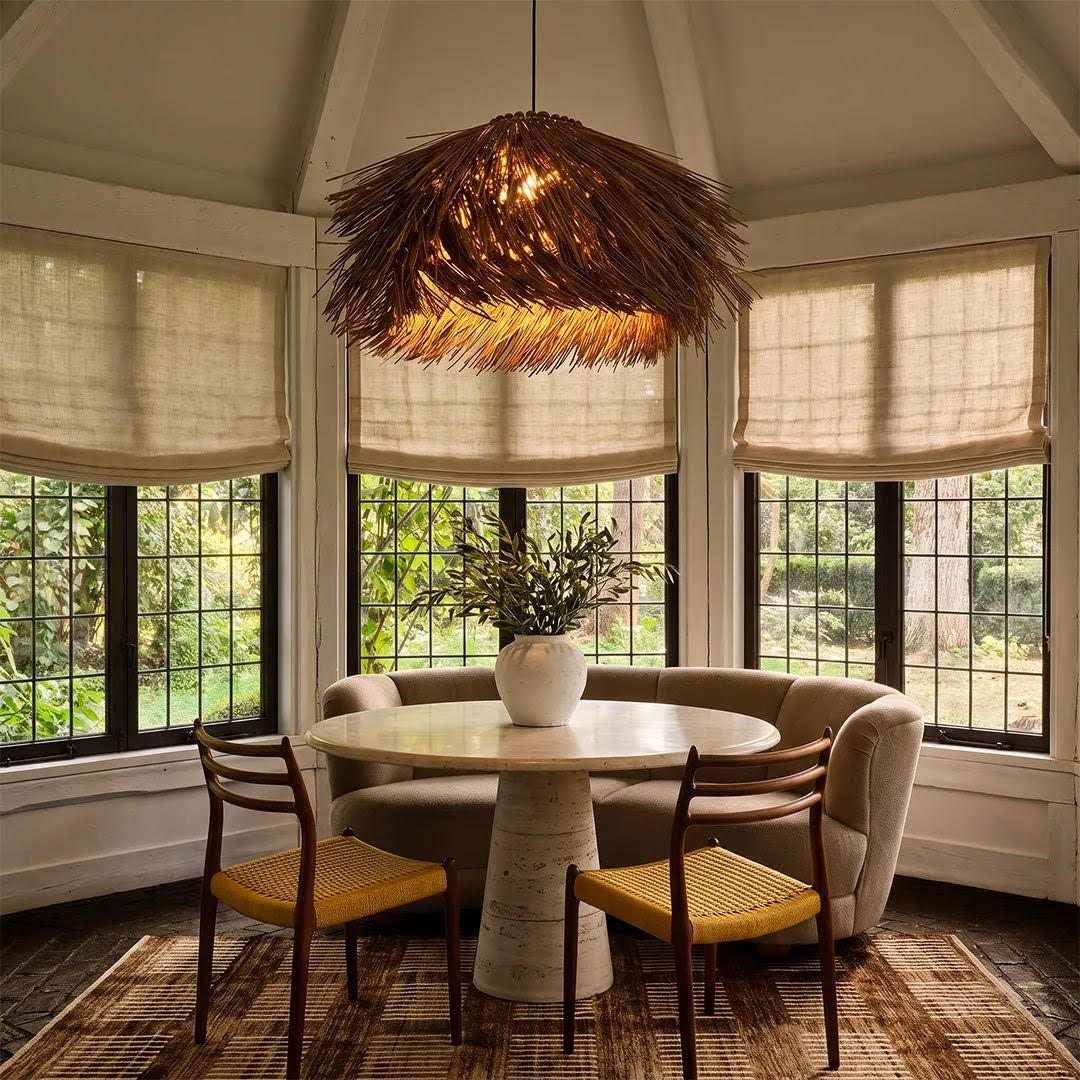
A woven shade suits a relaxed eating area where atmosphere matters as much as brightness.
Rattan Creates Texture, Not Perfectly Even Light
A rattan pendant light can make a plain room feel warmer before it is even switched on. The woven surface introduces texture to spaces filled with smooth countertops, painted cabinets, metal appliances, and flat walls. Because rattan is visually light, a generously sized shade can make a statement without feeling as heavy as a solid metal fixture of the same diameter.
At night, the weave becomes part of the lighting effect. Small openings allow light to escape across nearby walls and ceilings, creating a pattern of brighter and darker areas. In a dining nook or quiet sitting area, that shadow play can feel intimate. On a kitchen work surface, it may become frustrating if the pendant is expected to provide all the functional light.
Shade density matters. An open weave lets more light travel through the sides, while a tightly woven design directs more of it downward. The bulb may also remain visible through the gaps. If it sits near seated eye level, a bright clear bulb can cause more glare than expected. A frosted bulb or a lower-output warm LED often feels more comfortable, provided other fixtures handle the practical lighting.
Rattan also changes colour under different bulbs. Cool white light can make natural fibres look pale or grey, while warmer light tends to bring out honey, straw, and brown tones. The goal is not to make every woven pendant orange, but to avoid a colour temperature that fights against the material.
Glass Reveals Every Decision Around the Bulb
Glass pendant lights can feel lighter and cleaner because the shade does not create a solid visual block. This makes glass particularly useful in kitchens where pendant lights hang in front of windows, open shelving, or a detailed backsplash. The view remains relatively open even when several fixtures are installed in a row.
Yet “glass” is not one lighting effect. Clear glass exposes the bulb and produces sparkle, but it can also create sharp glare and reflections. Frosted glass softens the bulb into a more even glow. Ribbed or patterned glass bends the light and adds texture. Amber, smoke, or coloured glass changes both the brightness and the apparent colour of nearby surfaces.
Transparent glass adds a defined shape without creating a heavy visual barrier.
The bulb deserves extra attention in a transparent shade because it becomes part of the design. A bulb that is too small may look lost; one that is too long can extend awkwardly below the glass. Very bright filaments can be uncomfortable over a dining table, where people naturally look across and slightly upward while talking.
Glass is also less forgiving about everyday mess. Dust, fingerprints, cooking vapour, and water spots can become visible when the pendant is illuminated. A sculptural glass shade above a rarely used console may require little attention, while three clear pendants beside a busy stovetop can become a regular cleaning job. That does not make glass impractical, but access should be considered before choosing an intricate shape.
Test the Light at the Height You Will Actually Use
A simple evening test can prevent an expensive disappointment. Before installing the final fixture, hang a temporary bulb at approximately the planned height. If possible, hold a basket, sheet of paper, or translucent bowl around it to imitate the direction of the shade. Sit at the table and stand at the island rather than judging only from the doorway.
Notice where your eyes meet the bulb. Check whether the work surface is bright enough and whether shadows from your hands fall directly onto the area where you would prepare food. Walk into the adjoining room as well. A pendant that seems gentle from below may appear much brighter when viewed from across an open-plan space.
Frosted glass conceals the bulb and reduces glare while preserving a polished appearance.
Do Not Ask One Pendant to Handle the Entire Room
Many disappointing lighting choices begin with an unrealistic expectation: one decorative fixture is asked to provide task lighting, general illumination, and evening atmosphere at the same time. A woven pendant can create warmth while recessed or under-cabinet lights support kitchen work. A clear glass pendant can add sparkle while a dimmer makes it more comfortable during dinner.
Layered lighting also gives the room flexibility. The bright fixtures can be used while cooking or cleaning, then switched off when the family sits down. The pendant no longer has to be excessively bright simply because it is the only available light source.
The best material is therefore not the one that matches the furniture most neatly. It is the one whose light suits the ordinary moments beneath it: preparing breakfast, reading at the table, talking after dinner, or cleaning the counter at the end of the night. A pendant is successful when it still feels right after the daylight disappears.