Types of Deep-Sea and Reef Excursions
When you venture out from the Fort Lauderdale coastline, you are essentially entering a massive, living ecosystem that shifts based on depth, temperature, and current. Understanding the different types of excursions available is the first step in aligning your expectations with the reality of the ocean.
Most professional operations offer a variety of techniques depending on what is biting and where the fish are holding. Reef fishing typically occurs in shallower waters, where structure—either natural coral or artificial wrecks—provides a haven for bottom-dwelling species like grouper and snapper. This is often an action-packed experience, perfect for those who enjoy constant movement and the challenge of pulling a fish away from its rocky home.
In contrast, blue water or “deep-sea” fishing takes you further offshore toward the Gulf Stream. Here, the focus shifts to pelagic species that roam the open ocean. Techniques such as trolling—where lines are pulled behind the moving boat—are standard. You might find yourself kite fishing, a specialized method used to keep bait skipping on the surface to entice sailfish, or deep dropping, which involves sending heavy weights to the ocean floor in search of elusive deep-water dwellers.
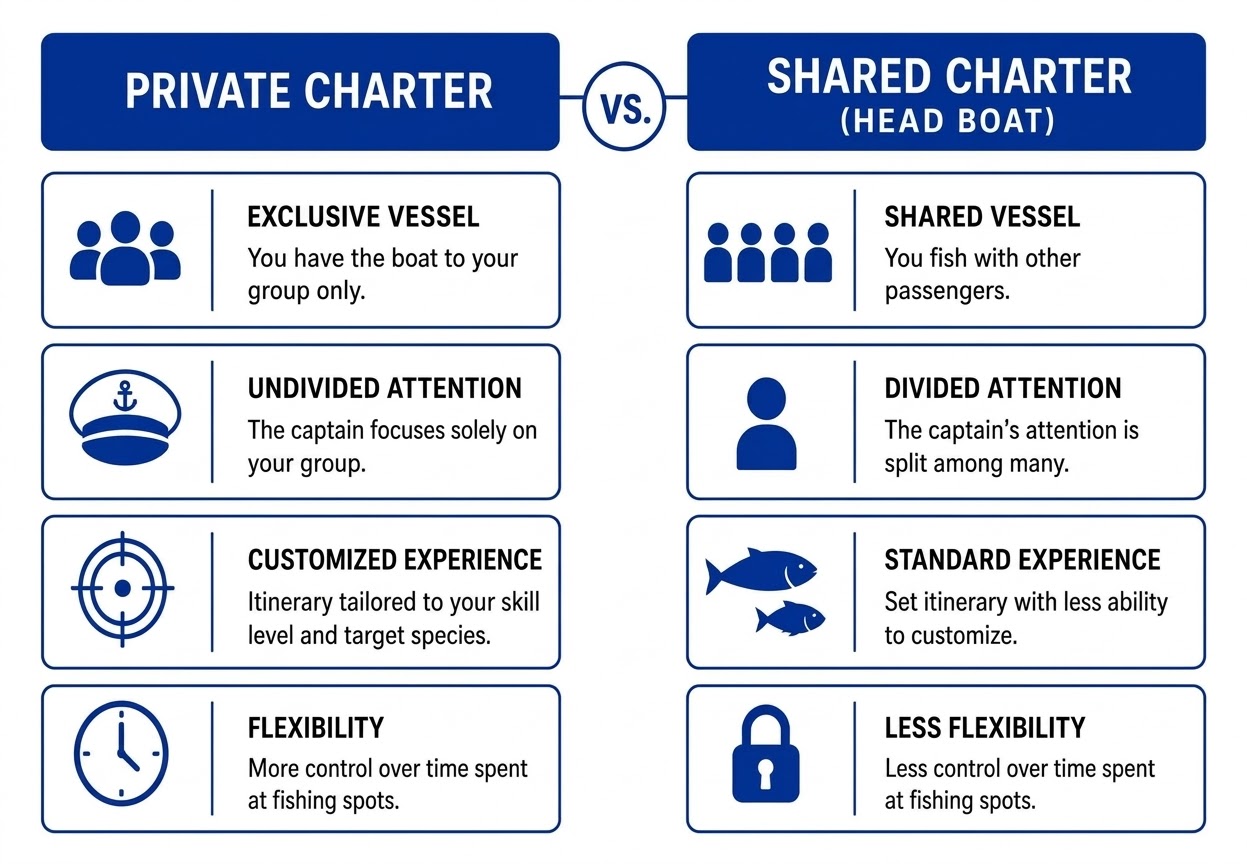
Choosing between a private charter and a shared or “head boat” trip is a significant decision. A private excursion grants you exclusive use of the vessel and the captain’s undivided attention. This allows for a customized itinerary tailored to your group’s specific skill level and target species. Shared trips, while more budget-friendly, require you to fish alongside strangers, often with less flexibility regarding the time spent at specific fishing spots.
Key Factors When Choosing Offshore Fishing Charters
Selecting the right operator is the most important variable in your trip’s success. As you begin your search for Fort Lauderdale private fishing charters, prioritize vessels that carry proper insurance and maintain high safety standards. A reputable captain will not only be an expert in locating fish but will also be a steward of the ocean, prioritizing the safety of every guest on board.
Look for boats equipped with modern marine electronics, such as high-definition sonar and GPS plotters, which are essential for navigating the complex currents of the Atlantic. Additionally, consider the size of the vessel. Larger boats provide more stability in choppy seas, which can be a game-changer if you or your guests are prone to motion sickness. Always inquire about the captain’s credentials and their experience in local waters; there is no substitute for a skipper who understands the subtle “current edges” that dictate where fish congregate.
What to Expect on Offshore Fishing Charters
Once you leave the inlet, the experience is a blend of anticipation and adrenaline. You can expect the crew to handle the heavy lifting—literally. Professional mates are there to rig the bait, set the lines, and manage the spread. When a fish strikes, the mate will guide you on how to handle the rod, ensuring you maintain the right tension to keep the hook set while preventing the line from snapping.
The cockpit is the heart of the operation. Whether you are using light tackle for mahi-mahi or heavy tournament-grade gear for a marlin, the crew will be right by your side. Once a fish is brought to the boat, the crew handles the landing, measurement, and, if you choose to keep your catch, the professional cleaning and filleting. This service is a standard part of the charter experience, allowing you to head home with fresh fillets ready for the grill.
Essential Amenities and Gear Inclusions
Most private charters come fully equipped, meaning you do not need to bring your own rods or reels. Quality operators provide high-end tournament tackle, which is far more durable and reliable than standard consumer gear. Beyond the fishing equipment, your charter should include:
- Fishing Licenses: In most cases, the boat’s blanket permit covers all passengers, so you do not need to purchase an individual license.
- Safety Gear: Life vests, first aid kits, and emergency communication devices are mandatory and provided.
- Comfort Features: Look for boats with a head (restroom), shaded seating areas, and large ice chests to keep your beverages and food cold.
- Electronics and Outriggers: These tools allow the crew to cover more water and present baits more effectively, increasing your strike rate.
Seasonal Target Species and Peak Migration Windows
Fort Lauderdale is a year-round destination, but the “best” time to visit depends on what you want to catch. The Atlantic waters here are highly dynamic, influenced by the proximity of the Gulf Stream, which brings warm water and migratory species close to the shore.
The winter months, specifically from November through April, are widely considered the peak season. This is when sailfish migration is at its height, offering anglers the chance to engage in some of the most exciting light-tackle fishing in the world. As the water warms in the spring and summer, the focus shifts toward pelagic species. Mahi-mahi (dolphin fish) become more prevalent, often found under floating debris or weed lines. Blackfin tuna and wahoo are also consistent targets throughout the year, with their activity levels fluctuating based on bait concentrations.
Seasonal Target Species on Offshore Fishing Charters
Understanding the “runs” of these fish is vital for planning your trip. If you are chasing a trophy sailfish, focus your booking on the winter months. If you prefer the high-energy battle of a mahi-mahi, late spring and early summer offer excellent opportunities. Bottom fishing for grouper and various snapper species remains a reliable staple during the warmer months, providing a consistent “Plan B” if the pelagic bite is slow. Always discuss your target species with the captain when you book; they will have the most accurate, up-to-the-minute reports on what is currently moving through the area.
Essential Preparation for First-Time Anglers
If this is your first time on the water, preparation is key to ensuring you enjoy the day rather than spending it feeling ill. Seasickness is the most common hurdle; if you are unsure how you will react to the ocean swell, consider taking an over-the-counter motion sickness medication at least an hour before departure.
Sun protection is non-negotiable. The reflection of the sun off the water can be intense, even on cloudy days. Wear polarized sunglasses to reduce glare and help you see fish beneath the surface, and opt for long-sleeved, UV-rated clothing. For footwear, avoid dark-soled shoes that leave marks; light-colored, non-slip deck shoes are the standard.
Regarding tipping, it is customary to tip the mate 15% to 20% of the total charter cost. They work tirelessly to ensure your lines are in the water and your catch is handled properly, so acknowledging their hard work is a standard part of the Fort Lauderdale private fishing charters etiquette.
Packing Checklist for First-Time Anglers:
- Polarized sunglasses (with a strap)
- High-SPF sunscreen (non-aerosol is preferred on boats)
- Lightweight, breathable clothing
- A hat with a brim
- Motion sickness medication
- A small personal bag for your phone, wallet, and camera
- A positive attitude and patience
Frequently Asked Questions About Deep-Sea Charters
Do guests need to purchase an individual fishing license?
In the vast majority of cases, no. Professional charter boats operate under a blanket commercial fishing license that covers every passenger on board. This is one of the primary benefits of booking a professional charter versus trying to fish from a rental boat or the shoreline.
What is the standard duration and cost for a charter?
Most operators offer half-day (4-hour) and full-day (8-hour) options. As of 2026, you can expect to pay around $450 for a half-day trip and upwards of $850 for a full-day, though these prices can vary based on the vessel size and the number of anglers. Always ask if fuel surcharges are included in the quoted price to avoid surprises.
How do weather cancellations and rescheduling work?
Safety is the captain’s primary concern. If the marine forecast predicts dangerous conditions, the captain will cancel or postpone the trip. Most reputable companies will offer a full refund of your deposit or the option to reschedule for a later date. Always clarify the cancellation policy at the time of booking so you understand the terms if the weather turns sour.
Conclusion
Planning a trip out into the Atlantic is an investment in an experience that stays with you long after you return to the dock. By understanding the nuances of the local industry, respecting the seasonal patterns of the fish, and preparing appropriately for the elements, you set yourself up for a successful day on the water. Whether you are aiming to land a sailfish in the winter or spend a summer day filling the cooler with mahi-mahi, the key is to communicate clearly with your captain and trust in their expertise. With the right preparation, your next adventure in Fort Lauderdale will be more than just a fishing trip—it will be a highlight of your year.